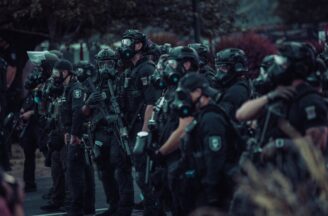
Alarm after FBI arrests US army veteran for ‘conspiracy’ over protest against Ice
Legal experts say charges against Afghanistan war veteran Bajun Mavalwalla II mark an escalation in the Trump administration’s crackdown on first amendment rights
Search
Important Updates

Issues
Take Action


SCAR is excited to announce the re-launch of the Court Watch program, and has hired Robert Huitt as our Court Watch Coordinator Robert Huitt earned a Master of Urban & Regional Planning and a Master of Public Administration from EWU in 2020. Since then, Robert has worked as a tribal planner, and a racial equity and network manager. He was also closely involved with the Justice Not Jails PAC and campaign that defeated Measure (The measure sought to fund a new jail) in 2023. Scar is also in the process of hiring 2 Court Watch Research Assistants with the goal of having them start in early January. SCAR will be looking to onboard volunteers early next year as well.
This program is intended to employ, train, and send out a team of individuals, who will then consistently observe court hearings to identify and document any existing and/or emerging trends at the local level.
A lot of energy, care, and passion is going into the development of the Court Watch protocol and methodology. The data compiled from this program will then be used to shape policy and push for a more equitable system. Once established, this framework can then also be used in other institutions as well.

A Court Watch Program is a community-driven initiative designed to monitor and observe court proceedings. The program’s primary objective is to promote transparency and accountability in the legal system by observing and documenting court proceedings. Court Watch Programs play a crucial role in ensuring that the courts operate fairly and equitably, particularly when it comes to marginalized and underrepresented communities.
The Court Watch Program is designed to observe and document court proceedings in the Spokane area. Our trained volunteers attend court hearings and take notes on various aspects, such as the demeanor of the judge, the arguments made by attorneys, and the proceedings’ outcome. The information gathered by our volunteers is compiled and used to provide data-driven feedback to judges, attorneys, and other relevant parties in the legal system.
Court Observation is open to all SCAR members who wish to support the victims of hate crimes and to prevent bias in the courtroom. Please sign up for an hour that fits into your schedule. Even one hour makes a difference!
Several court watch programs across the country have made a significant impact on the communities they serve. Here are some examples of the positive impacts of other court watch programs.
Increased Transparency: Court Watch Programs help to increase transparency in the legal system by providing an additional layer of accountability.
Reducing Racial Disparities: In some cases, court watch programs have helped to reduce racial disparities in the legal system by bringing attention to disparities and prompting changes in court policies.
Identifying Systemic Issues: By observing court proceedings, court watch programs can identify systemic issues that need to be addressed in the legal system. For example, a court watch program in New York City identified issues with the handling of domestic violence cases, which led to changes in court policies.
Improved Courtroom Demeanor: Court watch programs have been known to improve the demeanor of judges and attorneys in the courtroom. Knowing that their actions are being observed can encourage them to act more professionally and courteously.