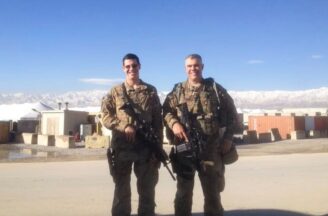
It has been years since the Spokane community has been presented with the level of opportunity we currently have to make an immediate and profound change in our local justice system. Right now, with ballots already streaming in, Danny Tarkenton is fighting to become our next Spokane County Prosecutor. The SCAR Team supports her, and we believe you should, too.
First, here’s how we came to support her…
We Got to Know Danny for Ourselves
SCAR has been dedicated to racial equity in Spokane County’s criminal-legal system since 2017. Every election would-be public servants put themselves forward as ideal candidates to judge our disputes, administrate our courts, prosecute illegal harms, and oversee our community safety. Every election—whether we publicly endorse candidates or not—SCAR sits down in good faith with a dozen or more such candidates hoping to learn more about them and build a relationship. Whether a candidate wins or loses, the community should know who serves them, and who may continue to exercise influence after the November spotlight has faded.
SCAR team members have been building a relationship with Danny for months now. Face-to-face, in group settings and personal one-on-one meetings, we’ve gotten to know Danny in a way that transcends the political drama, that is why we feel completely comfortable with what we have to say next: In fact, is our belief that Danny Tarkenton is the only candidate in the County Prosecutor’s race demonstrating values and integrity deserving of public trust.
Danny Tarkenton doesn’t just claim to care about access to justice, racial equity, police accountability, and public safety. The evidence available to the SCAR team shows that Tarkenton has demonstrated her commitment to these goals and to the Spokane community at the expense of her peace, privacy, and career.
The Evidence Available to Us
We won’t be linking back to it, but if you read the October 22 Spokesman Review article for yourself, you would find it was filled with comments from attorneys within the County Prosecutor’s Office McCollam currently leads—including Tarkenton’s former supervisor—opining about her temperament and legal judgement. According to these people, Tarkenton was resistant to professional criticism and mentorship, did not understand the law, and inappropriately substituted her own judgement for that of her supervisors.
Specifically, a case involving the Involuntary Treatment Act, and the rights of an individual receiving psychiatric care is referenced, along with Tarkenton’s implied overreliance on her Bachelor’s Degree in psychology. Vague references to case details and Tarkenton’s educational background paint a picture of an arrogant young woman who burst into the office too big for her britches and refusing to be set right by would-be career mentors.
What’s missing from the article is an actual conflict and legal analysis that led to Tarkenton to oppose her superiors and risk her career.
SCAR was given access to documents by Tarkenton, including an email where she laid out the exact concerns at the heart of the conflict referenced. In this email, sent by Tarkenton to Senior Director of Human Resources, Ashley Cloud (remember this name), she never once references her psychology degree. Instead, she lays out a clear, strictly legal analysis, explaining why she believed directions from her supervisor would violate a defendant’s rights and conflict with Washington State law.
The Spokesman Review was also given access to this document, but the context it provides was not included in their article.
Voters should take note that a legal workplace is not like a typical corporate office. Under the Admission and Practice Rules adopted by Washington State’s Supreme Court, all licensed attorneys in the State of Washington are sworn to follow and protect the laws and Constitution of Washington and the United States. Furthermore, under Washington’s Rules of Professional Conduct, “a lawyer is not relieved of responsibility for a violation by the fact that the lawyer acted at the direction of a supervisor” (WA RPC 5.2). In other words, violating the rights of a defendant—even at the direct instruction of her supervisor—would be a violation of Tarkenton’s Oath of Attorney.
Under these circumstances, refusing to follow a supervisor’s directions cannot be dismissed as insubordination or arrogance, but must be considered an act of personal bravery and professional integrity. The courage and integrity to stand up to power, honor one’s oaths, and hold fast to one’s ethics is precisely what Spokane’s Office of the County Prosecutor needs.
The Interview: Part 1 – Addressing Concerns
The recent Spokesman article echoed a lot of concerns about Tarkenton’s candidacy, questions that deserve to be addressed directly. That’s why we sat down with Danny Tarkenton for over an hour yesterday to ask her the difficult questions. Below are her responses in her own words (responses have been edited for clarity, words are her own):
SCAR: You appeal a lot to your military experience as the basis of your leadership. Can you explain how your service prepared you to lead the Prosecutor’s office?
Tarkenton: “In the military, it is essential that you are part of the team, or you or your people around you can die, so you learn to work together.
An NCO (non-commissioned officer) is a leadership role, whereas an officer is managerial. They’re just different priorities on how to get the mission. An officer has their plans they want to implement for the mission, then your NCOs are the backbone of the army, so they say. You have to have the leadership quality and the teamwork ability in order to be successful in that mission without getting people killed.
I was the squad leader in basic training. Once I arrived to my unit, I was a sergeant. I was a training NCO when I came back. So I have a lot of leadership experience. In my mind, people die if you don’t know how to work together.
In basic training we were at Fort Leonard Wood in the winter, so it was negative degrees. And they had us march in circles in negative degree winter with just our potato sacks on, so no winter gear. People got really sick in our unit.
[We had] a very abusive drill sergeant … and everybody was afraid to say things. But [Fields] was coughing up blood. People were getting pneumonia. So I was like, “You guys, we have to say something.”
And they’d be like, “Who’s gonna say it?” I thought [maybe] a JAG officer—which is a lawyer in the military. So I went up to the drill sergeants. I’m demanding a JAG officer or maybe OCI (Office of Complex Investigations),and so they got really scared and I stood my ground. Eventually they just kind of nipped it in the bud when it got to the battalion commander.
[Tarkenton explains that her initial complaint about abusive training conditions died once it ascended the chain of command.]
I faced a lot of violence in retaliation for standing up for my team. I got bronchitis, laryngitis, upper respiratory infection… I got pink eye, and I got bruised and battered pretty bad for being a tattletale.
But the sick call took notice of what was going on, and then they filed an investigation.
That officer got barred from promotion, so he couldn’t rank up anymore, and that drill sergeant got removed.
It took me getting the s*** kicked out of me for somebody to be compelled to find another way to help. [That taught me that leadership is being] willing to face adversity for a greater cause, to protect your people.
I learned that a lot.
[Tarkenton ended her military career with an honorable discharge and medical retirement.]
SCAR: Given the reporting on your time at the County Prosecutor’s Office, how do you respond to voters who question your ability to work on a team?
Tarkenton: When I was in the prosecutor’s office, I worked with the public defenders in my courtroom. So like Jacob Salazar, Natalie Gold, Amanda Denny…we all worked together.
I would even set office hours on Friday. Working 50, 60 hours [a week], Friday is the only time we would have time to catch up, but I would still leave an hour for a public defender [to review] a case that we were really passionate about.
SCAR: A lot of people might hear this answer and say, “Wait—you’re working with the public defender? Aren’t you supposed to be working against the public defender to put the “bad guy” away?” Why are you giving them your time and effort?”
Tarkenton: As a prosecutor, I assess the harm, the harmed, and the harmers. The goal is to not create more harm while resolving the harm that’s been done to the community.
Our public defenders are there to protect the rights of these people that have harmed the community, and then my job is to enforce the law and address the harm that they’ve caused.
[We didn’t review] all the cases. Usually, a public defender would have one case that they were just like, “we should really review this.”
A great example was somebody who was working on their bike, and they lived off in the country, but they also had a suspended license, and they didn’t have insurance. But I was like, “Well, I actually ride motorcycles, and if it’s under $1,000, then you actually don’t need insurance” and then [the public defender] and I would work it out.
They were able to tell me a lot of [the defendant’s] circumstances, and if we couldn’t reach a resolution, then it would be a very fair, “Okay, we’ll just get ready for trial then.” And it wasn’t taken personally. … Being able to have that kind of relationship, even with your public defenders, [is important]. That way it’s about resolving the harm that’s been done.
Usually there’d be one or two cases [the public defenders] weren’t really sure about, but if we had to go to trial, then we would.
SCAR: So the prosecutors and public defenders are working toward the same goal of justice?
Tarkenton: Yeah…we’re a family unit.
SCAR: A lot of voters rely upon the candidates to explain the power, duties, and responsibilities of an elected office. When candidates appear to disagree on these, it becomes a question of credibility, and voters often choose the candidate who appears to have the most knowledge and relevant qualifications. Can you explain your understanding of the County Prosecutor’s role and why we should trust your understanding of it?
Tarkenton: Yeah, the RCW (Revised Code of Washington) actually lists out the duties of the elected.
[RCW 36.27.020 Outlines the duties of a County Prosecutor under Washington State Law.]
This is an elected role where we’re chosen by the people to represent them, but instead of Olympia, like a legislator, it’s in the office of the prosecutor. The chief deputies are the ones who supervise and try to carry out the objective of the elected [officer] who is chosen by the people.
The job is about advising county commissioners on land, water, and power. When it comes to the AI data centers, they ask the county prosecutor’s office if this is legal to do, [and] we review the environmental laws. But even then, that’s still the [job of the] chief civil deputy. My job is to ask them to review [the law], and then I provide [the county with] that information. With the rape kits here in Washington State, we have to work with the state to ensure that that’s efficient. There is prosecuting civil and criminal cases.
[Tarkenton explains that the day-to-day work of prosecuting cases falls primarily upon the deputies and staff prosecuting attorneys.]
The deputies are the extension of the elected. On all of our documents you have the deputy’s name and then the elected’s name. In the RCW, our duty is to implement justice reform.
[In fact, under Washington State law, County Prosecutors have a duty to “Seek to reform and improve the administration of criminal justice and stimulate efforts to remedy inadequacies or injustice in substantive or procedural law.”]
That’s one of my main goals. And then also having that responsibility of those charging decisions. It’s that power of discretion. Prosecutors are the most powerful person. We’re the ones that sit on the certification election board, and then we’re the ones that even force the election laws in case anybody foils with it. … And apparently the prosecutor is the one responsible for writing stuff within the ballot. You know those like initiatives and stuff.
And then we’re supposed to be within the community. We’re supposed to be on the board. We’re supposed to meet with the NAACP and other groups within our community to make sure that they’re represented. There’s no time to do trials if you’re actually doing your job as the elected: connecting with your community so that their message can make it to the prosecutor’s office.
That’s why I just think it’s so unfortunate that Preston seems to think he is … above the people, almost like a pope situation. Like you’re the only one that gets the Bible.
No, everybody can read the law. Everyone can advocate for themselves. Even a prosecutor’s position didn’t used to be government until like the last 100 years, if that. So we are all capable of advocating for ourselves. It’s just a way to prevent people from representing their communities.
SCAR: What about the people who say, “Yeah, you’re not going to be in court all the time, but your deputies are, and everyone else in that office will be …
Tarkenton: Except for Civil. They don’t really touch it. Criminal though, for sure.
SCAR: Fair enough. But what do you say to professionals—or even people who have only a vague idea how management works—who say, “Wait—if you haven’t done the job very long, you can’t actually provide guidance. You can’t mentor anybody.”
Tarkenton: Yeah, but we can delegate. We can provide the mentorship and the guidance that any leader can. If there’s something that’s outside of the expertise, though, what do we do? We delegate to the expertise.
That is also what the Chiefs are for. The Chiefs really do most of the heavy lifting. Like Preston, if he stayed as a chief, probably pretty decent. But as an elected position, no. Because he’s not a very good leader.
[For example], misdemeanor courts, the way it’s structured right now is supposed to be like a rite of passage. It’s professional hazing. They want you to suffer because they did, as opposed to finding a resolution that is efficient and effective that treats your deputies with some dignity that doesn’t overload. That’s a leadership position. …
As the elected, I’m also supposed to be checking in on the well-being of my deputies to make sure that they are taken care of. Or if there is some sort of disconnect … or if I’m hearing of sexual harassment, that’s the elected position to take care of that too. [And] work culture policy when it comes to charging decisions… Like I said, it’s a leadership position.
SCAR: And how would you look out for your deputies without an intimate understanding of what they’re going through?
Tarkenton: Looking up data, that’s a huge deal. Seeing the charging decisions, what it is that our grants are being used for. … But also going in and checking in on people. Be able as the elected to say, “you need to have about 30 to 40 felony trials on your docket. You have over 100. Why is that?” That’s the elected job to figure that out and to help reduce some of that load.
I was a training NCO for over 150, 200 soldiers all across Eastern Washington, ranked above and below [me]. I didn’t have to be a major to understand what it is that a major needs, what his certifications are, and even building [“building” or “billing”?] is different for that rank. I just learned how to do it because I love my community. When you love something, you do everything you can to learn how to take care of it.
SCAR: [Referencing a previous conversation] You once compared Deputy Prosecutors to NCOs, describing them as the “backbone” of the office. Who currently exists in that office that you would be able to work with going forward, who could be that backbone?
Tarkenton: Yeah, I think the smart deputies are very quiet…and I know who those are.
SCAR: What about the lawyers who say they’ll quit if you become County Prosecutor?
Tarkenton: I hope that if they truly are passionate about serving the community and public service, then they’ll understand that we need to work together. … There’s still your chiefs and your other deputies and your legal assistants and your court clerks. Like there’s literally everybody, but you’re gonna leave because the elected is different?
This isn’t an ego issue. We’re serving our community. …I don’t think many will [leave]. But if they do, there are plenty of people who do want to serve the community. People leaving because their team didn’t win? What are we doing?
If you have the values to love your community, you will learn everything you need to do to take care of the thing that you love. … I’m not doing this to be somebody. I’m doing this to do something.
So when you have that drive, just as I did as a training NCO or really anything— even in this campaign—I love my community so much, [and I’m] trying to figure out how to fight the old guard as an independent. Because I love my community, I’m figuring out how to do this efficiently and effectively with very little money. Being creative, building these connections in the office and out in the community.
SCAR’s Position
Danny Tarkenton is an imperfect candidate. Voting for her will not solve racism in Spokane County’s criminal-legal system, and if elected she will face many challenges from inside and outside the County Prosecutor’s Office. But a vote is not a quick fix, a wish, or a love-letter. It’s a bus–a vehicle we take to get us as close to our destination as possible.
We—the people—are responsible for holding our elected officials accountable, and often we must be even more vigilant of electeds who successfully appeal to our point of view. If Danny Tarkenton is elected, SCAR will be vigilant. This community will not hesitate to constructively criticize the individuals we elevate to power. First, however, we must secure the power.
Danny Tarkenton, stepped up to challenge an interim County Prosecutor who has had over a year to demonstrate his values. McCollam resists community oversight of police, dismisses the role of systemic racism in our justice system, and abandons domestic violence survivors. Danny Tarkenton represents a chance for change.
To quote Tarkenton herself, “Experience is inevitable,” but character is fundamental. This year, we urge you to vote for the values we want to see in our Prosecutor’s office: character of integrity that we can trust with power.
[Stay tuned for part 2 of The Interview: Tarkenton’s Vision for the Spokane County Prosecutor’s Office.]